
What Happens When You Are Caught Driving Without Insurance in Washington
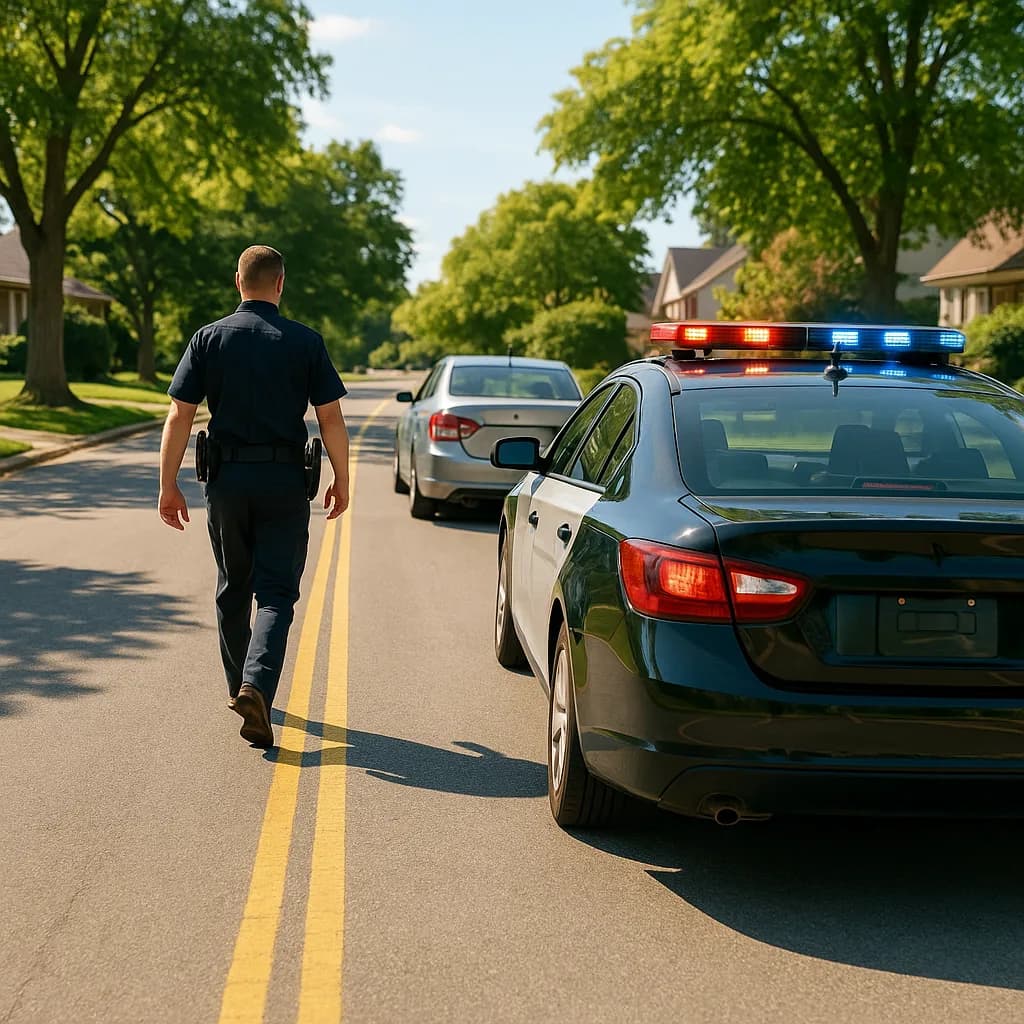
You were pulled over, or you were in an accident, and the officer asked for proof of insurance. You did not have it. Now you are trying to figure out what the penalty is and what you need to do to fix it. Washington does not treat uninsured driving as a simple ticket you pay and forget — the state suspends your license until you prove you have coverage and pay a reinstatement fee.
The immediate consequence is a citation for driving without insurance, which is a traffic infraction. The larger problem is what happens after: the Washington State Department of Licensing (DOL) suspends your license, and you cannot legally drive until you file proof of financial responsibility, satisfy the suspension period, and pay the reinstatement fee. Even if you buy insurance the next day, the suspension does not lift automatically — you have to complete the reinstatement process.
Compare car insurance rates in your state
Get quotes from licensed carriers — no obligation, no spam, results in minutes.
Get Your Free QuoteWashington Uninsured Motorist Rate
19.1%
Nearly one in five drivers on Washington roads carries no insurance. The state's enforcement system — license suspension, SR-22 filing requirement, and reinstatement fees — exists because voluntary compliance alone does not keep uninsured rates low.
Insurance Information Institute, 2023
The License Suspension Is Automatic, Not Optional
Washington law requires every driver to carry liability insurance that meets the state's minimum limits: $25,000 per person for bodily injury, $50,000 per accident for bodily injury, and $10,000 for property damage. When you are caught driving without that coverage, the DOL suspends your license. The suspension is not a punishment you can avoid by paying a fine — it is a mandatory administrative action that stays in place until you prove you have insurance and complete the reinstatement process.
The citation itself carries a fine set by the court, typically several hundred dollars depending on the jurisdiction. But the fine does not restore your license. The SR-22 is proof that you now carry insurance and will continue to carry it. Without it, the suspension remains in effect, and driving on a suspended license adds a new, more serious violation to your record.
How to Reinstate Your License After an Uninsured Driving Suspension

First, buy a liability insurance policy from a carrier licensed to write SR-22 certificates in Washington. Not every carrier offers SR-22 filing, so confirm before you buy. The carrier files the SR-22 electronically with the DOL on your behalf — you do not file it yourself. The SR-22 is not a type of insurance; it is a certificate your carrier sends to the state proving you now have coverage. Once the DOL receives the SR-22, the filing requirement is satisfied, but the suspension does not lift yet.
Second, wait out any mandatory suspension period the DOL imposed. For a first uninsured-driving offense, the suspension period is typically short, but it varies based on your driving record and whether other violations are present. Only after the DOL processes the fee payment does your license become valid again. If you drive before completing all three steps, you are driving on a suspended license, which is a criminal misdemeanor in Washington.
Related Articles





The Three-Year SR-22 Filing Period and What It Costs
Washington requires you to maintain SR-22 filing for three years after the conviction date, not the filing date. If your insurance lapses at any point during those three years, your carrier notifies the DOL, and the DOL suspends your license again immediately. The SR-22 filing itself does not cost extra — carriers do not charge the state a filing fee — but your insurance premium will be higher because you are now classified as a high-risk driver.
The premium increase varies by carrier, driving history, vehicle, and location. Some carriers specialize in SR-22 policies and offer lower rates for high-risk drivers than standard carriers do. Others will not write SR-22 policies at all. You need to compare quotes from carriers that write SR-22 in Washington to find the lowest rate. The three-year filing period is non-negotiable — there is no early termination, no hardship waiver, and no way to shorten it by maintaining a clean record. The clock runs for three full years from the conviction date.
Washington License Reinstatement Fee
It does not vary by offense count or driving history.
Washington State Department of Licensing
Hardship Licenses Are Available, But They Require SR-22 Filing First
If your license is suspended and you need to drive for work, school, medical appointments, or dependent care, Washington offers two types of restricted licenses: the Occupational/Restricted Driver License (ORL) and the Ignition Interlock Driver License (IIL). The ORL is available for most suspension types, including uninsured driving. The IIL is required for DUI suspensions and also requires installation of an ignition interlock device in your vehicle.
To apply for an ORL, you must first file an SR-22 certificate proving you have insurance. You cannot get the hardship license without the SR-22 on file. The application fee is $100, and processing takes approximately 10 business days. The ORL restricts your driving to approved purposes — work, school, court-ordered community service, substance-abuse treatment or meetings, healthcare, and dependent care — and limits the times of day and days of the week you can drive, not to exceed 12 hours in any 24-hour period. The restrictions are specific to your application, and violating them results in a new charge of driving outside the scope of the restricted license.
Compare SR-22 Carriers Before You Buy
Not every carrier writes SR-22 policies, and the carriers that do charge very different rates for the same coverage. In Washington, 18 carriers write SR-22 policies, including Geico, Progressive, State Farm, Farmers, Dairyland, Bristol West, The General, and National General. Some of these carriers specialize in high-risk drivers and price SR-22 policies more competitively than standard carriers do. Others write SR-22 only as an accommodation for existing customers and charge a significant premium increase.
Get quotes from at least three carriers that explicitly offer SR-22 filing in Washington. Confirm that the carrier will file the SR-22 electronically with the DOL on your behalf — you should not have to handle the filing yourself. Compare the total annual premium, not just the monthly payment, because some carriers front-load fees or require larger down payments. Once you choose a carrier, make sure the SR-22 filing goes through before you pay the reinstatement fee. The DOL will not process your reinstatement until the SR-22 is on file, and driving before reinstatement is complete is a criminal offense.