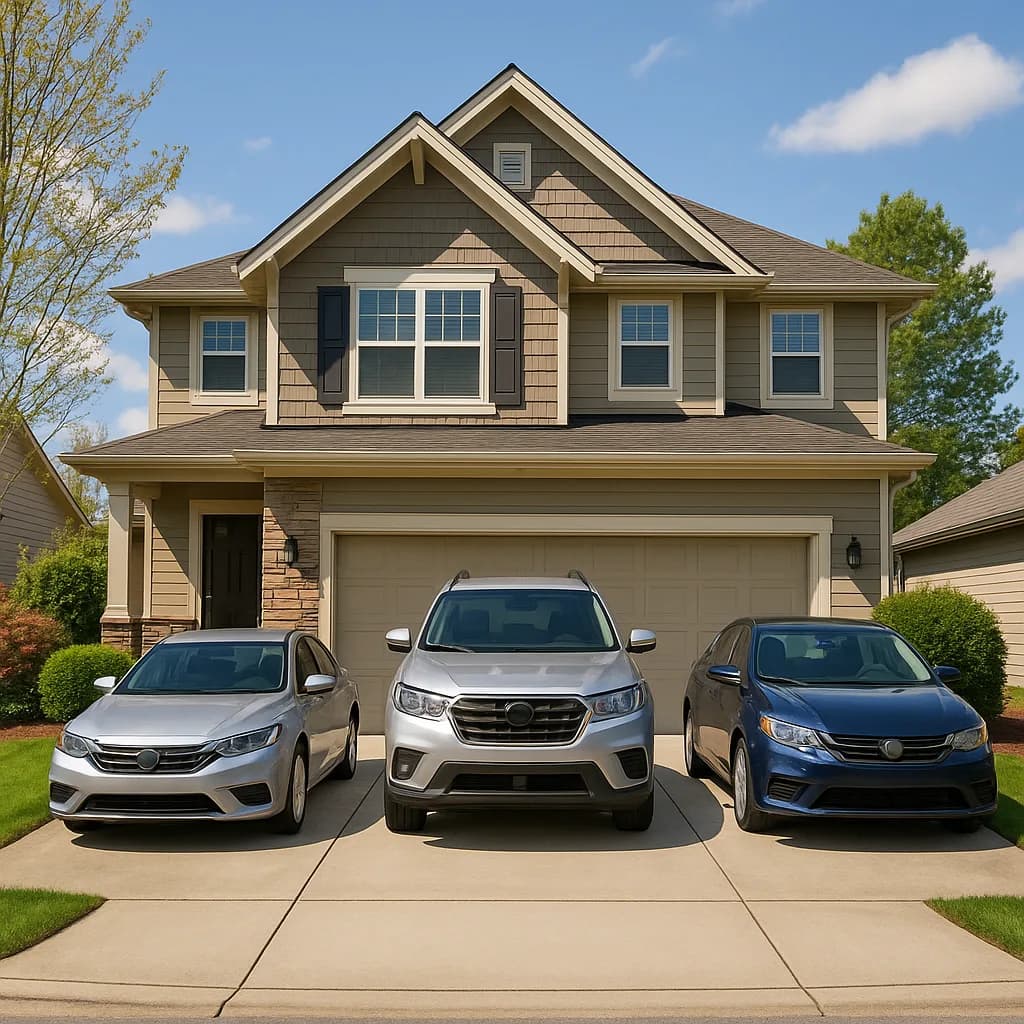
Why Multi-Car Policies Cost More Than They Should
You added a second or third vehicle to your Washington policy and watched the premium jump higher than expected. The carrier applied the same coverage levels to every car — full collision and comprehensive on the 15-year-old sedan you drive twice a week, identical liability limits on the commuter car and the weekend vehicle. You're paying for coverage you don't need on cars that don't warrant it.
Washington law requires $25,000 bodily injury per person, $50,000 per accident, and $10,000 property damage on every registered vehicle. Beyond those minimums, every coverage decision is yours. Most households structure their multi-car policy as if every vehicle carries equal risk and equal value. They don't. The path to cheaper insurance starts with breaking that assumption.
Compare car insurance rates in your state
Get quotes from licensed carriers — no obligation, no spam, results in minutes.
Get Your Free QuoteWashington Minimum Liability
$25,000 / $50,000 / $10,000
Every registered vehicle in Washington must carry at least $25,000 bodily injury per person, $50,000 per accident, and $10,000 property damage. These are floor requirements — you control every coverage layer above them.
Washington State Department of Licensing
The Coverage Mismatch Driving Your Premium
Carriers price multi-car policies by adding each vehicle's premium together, then applying the multi-car discount. That discount — typically 10 to 25 percent depending on the carrier — helps, but it doesn't fix the underlying problem: you're buying collision and comprehensive on vehicles where the coverage costs more than the car is worth.
Collision pays to repair your car after an accident. Comprehensive covers theft, weather damage, and vandalism. Both come with a deductible — $500 or $1,000 in most cases.
Washington does not mandate collision or comprehensive coverage. The state requires liability only. If you financed or leased a vehicle, your lender requires physical-damage coverage until the loan is paid off. Once you own the car outright, the decision is yours. A 12-year-old vehicle with 180,000 miles does not need the same coverage as a two-year-old financed SUV.
You're paying collision premiums on older vehicles where a total-loss payout minus the deductible won't cover replacement. That's the structural blocker raising your multi-car cost.
How to Structure Coverage Across Multiple Vehicles

Start by listing every vehicle on your policy with its current market value. Use your county assessor's valuation, Kelley Blue Book, or your carrier's declared value if the car is a specialty or classic vehicle. Write down the annual collision and comprehensive premium for each car — your declarations page breaks this out by vehicle. Compare the premium to the vehicle's value. If collision costs more than 10 percent of the car's worth annually, you're overpaying for coverage that won't return its cost at claim time.
Keep liability at or above state minimums on every car — Washington holds the registered owner liable for damages regardless of who was driving. Raise your deductible to $1,000 on vehicles worth $10,000 or more where you can absorb the out-of-pocket cost. A higher deductible cuts your collision and comprehensive premium by 15 to 30 percent depending on the carrier, and the savings compound across multiple cars.
Related Articles






Liability Limits and the Multi-Car Exposure
Washington's $25,000 per person liability minimum is low. If you cause an accident that injures another driver, $25,000 rarely covers their medical bills, lost wages, and pain-and-suffering claim. The injured party can sue you personally for the difference. When you own multiple vehicles, your exposure is higher — more cars means more drivers, more trips, and more opportunities for a claim that exceeds your policy limit.
Higher limits protect your assets and lower your out-of-pocket risk if a serious accident occurs. Uninsured motorist coverage is optional in Washington, but 19.1 percent of drivers in the state carry no insurance. Add uninsured and underinsured motorist coverage at the same limits as your liability. It costs less than collision on one vehicle and covers you when the at-fault driver has no policy or insufficient limits.
If one household member has a violation or accident on their record, ask your carrier whether excluding that driver from certain vehicles lowers the premium. Some carriers allow named-driver exclusions — the excluded driver cannot legally operate the excluded vehicle, but the policy no longer prices that vehicle for their risk profile. This works when you have a high-risk driver who only operates one car and other household members drive the remaining vehicles.
Washington Uninsured Motorist Rate
19.1%
Nearly one in five drivers in Washington carries no insurance. Uninsured motorist coverage protects you when an at-fault driver has no policy. It costs less than collision on most vehicles and applies across every car on your policy.
Insurance Information Institute, 2023
Comparing Carriers That Write Multi-Car Policies
Nineteen carriers write auto insurance in Washington. Not all of them offer competitive multi-car rates, and not all of them write policies for households with three or more vehicles. Carriers price multi-car policies differently — some apply the discount to every vehicle equally, others apply a larger discount to the second vehicle and a smaller discount to the third and fourth. Base rates vary more than discount structures. A carrier with a 20 percent multi-car discount and a high base rate will cost more than a carrier with a 10 percent discount and a lower base rate.
Request quotes from at least three carriers. Provide identical coverage levels for each quote — same liability limits, same deductibles, same optional coverages — so you're comparing base rates and discount mechanics, not coverage differences. State Farm, GEICO, Progressive, Allstate, Farmers, and USAA all write multi-car policies in Washington. If one household member qualifies for USAA membership, start there — USAA consistently writes competitive rates for multi-vehicle households and offers a straightforward multi-car discount with no tiering.
When to Re-Quote Your Multi-Car Policy
Re-quote your policy every two years even if your rate hasn't increased. Carriers re-price their books periodically, and a carrier that was competitive three years ago may no longer be. Major life changes trigger immediate re-quotes: you pay off a car loan and can now drop collision, a teen driver gets their own vehicle, you move to a different county, or a household member with a violation reaches the three-year mark where the violation drops off your rate calculation.
Adding or removing a vehicle mid-term re-rates your entire policy, not just the new car. When you add a vehicle, your carrier recalculates the multi-car discount across all cars and applies the new base rate. That's the moment to compare carriers — you're already disrupting the policy, and switching costs you nothing if you're within your current term. If your renewal is more than 90 days away, request quotes from other carriers before you add the vehicle. You may find a better rate by moving the entire household to a new policy rather than adding the car to your existing one.